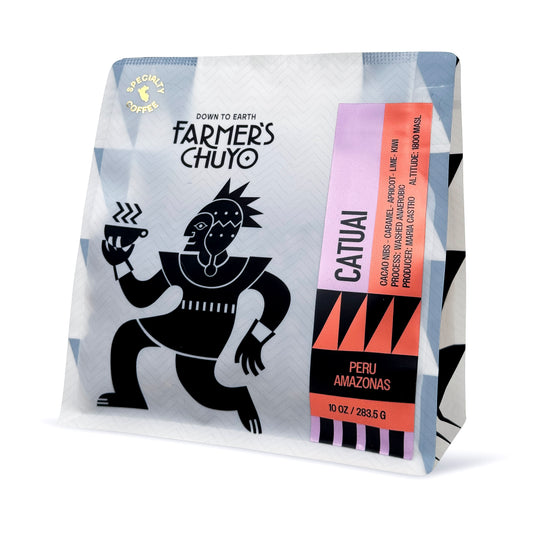
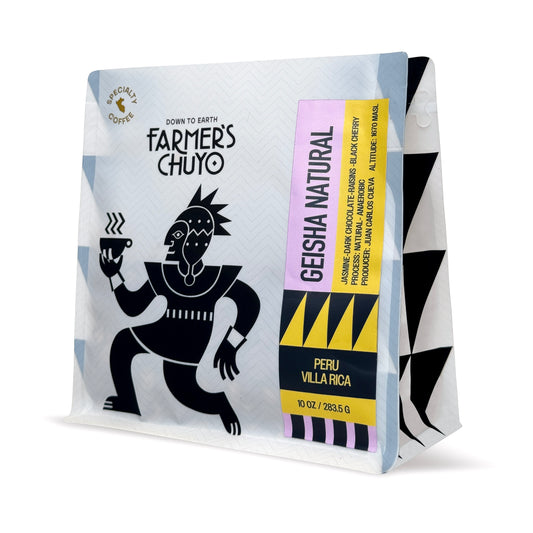
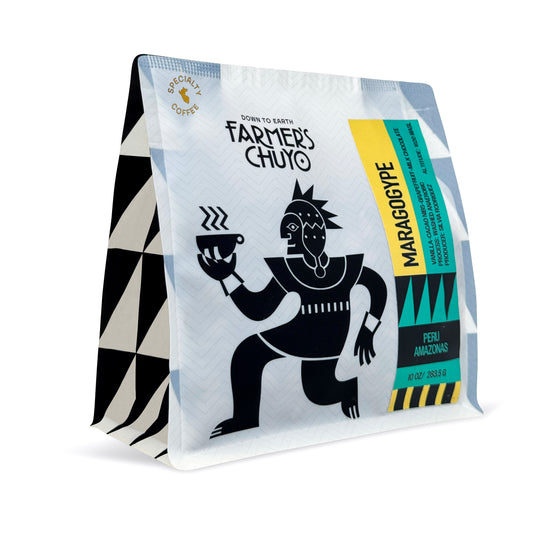
Peru’s position in the global coffee market is not defined by a single region or flavor profile. Instead, it is defined by geography, specifically the eastern slopes of the Andes, and by a production model built almost entirely on smallholder farmers.
Coffee in Peru grows between roughly 900 and 2,200 meters above sea level, across a long vertical corridor that runs from the northern border with Ecuador down to the southern highlands near Bolivia.
This corridor creates three broad producing zones:
-
Northern Peru
-
Central Peru
-
Southern Peru
Each zone operates under different climatic patterns, infrastructure realities, and market relationships, and these differences shape both production and flavor.
Central Peru
Historical Foundation and Balance
Central Peru, including Junín and Pasco, represents the historical heart of commercial coffee cultivation in the country.
Chanchamayo, located in Junín, was one of the earliest zones to establish coffee as a formal export crop in the 19th century.
Compared to the north, farms in central Peru often sit at slightly lower average elevations, though high-altitude production is still common.
The climate tends to be humid with consistent rainfall, supporting stable yields but also increasing disease pressure, particularly from coffee leaf rust.
The region’s cup profile is often described as balanced and approachable, with flavors such as:
-
Chocolate
-
Nuts
-
Mild citrus
-
Moderate body
These coffees frequently form the backbone of export contracts because of their consistency and volume.
Central Peru highlights an important aspect of the country’s coffee industry: not all specialty coffee is extreme or experimental.
A large portion of Peru’s specialty-grade coffee falls in the 82–85 point range under Specialty Coffee Association (SCA) standards. These coffees are clean, sweet, and well structured, meeting specialty thresholds without necessarily being competition-level lots.
This segment is essential. It bridges commercial and high-end markets while supporting stable producer income.
Beyond Geography
Why the Three Regions Matter
The division between North, Central, and South is not merely geographic. It reflects deeper structural differences, including:
-
Historical development timelines
-
Cooperative organization models
-
Relationships with certification markets
-
Infrastructure and export logistics
-
Altitude-driven environmental variation
Together, these regions form the foundation of Peru’s specialty coffee evolution.
Under Specialty Coffee Association standards, specialty coffee begins at 80 points. Peru consistently produces coffee above this threshold across all three zones.
The key differences between regions are not whether specialty coffee exists, but rather consistency, differentiation, and infrastructure.
The country’s movement toward higher quality has been driven by:
-
Improved post-harvest processing control
-
Cupping laboratories aligned with international protocols
-
Research on disease-resistant varieties
-
Increasing demand for traceable supply chains
The Bigger Picture
Peru is not defined by a single iconic coffee region in the way countries like Ethiopia or Colombia often are in consumer narratives.
Instead, Peru’s identity comes from scale distributed across geography.
The country is:
-
One of the world’s leading exporters of organic Arabica coffee
-
Built largely on smallholder production
-
Fully integrated into global specialty grading systems
-
Capable of producing coffees ranging from reliable specialty lots to high-scoring microlots
Understanding Peruvian coffee requires looking beyond tasting notes and seeing the entire landscape that produces them.