







-
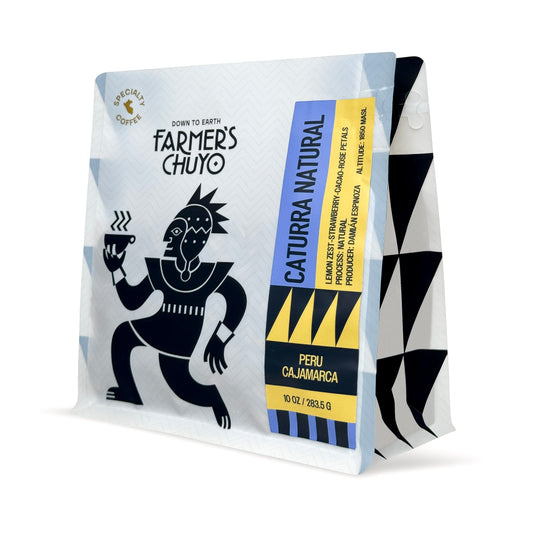
Caturra Natural
 Vendor:Farmer's Chuyo
Caturra Natural
- Regular price
- From $32.59
- Sale price
- From $32.59
- Regular price
-
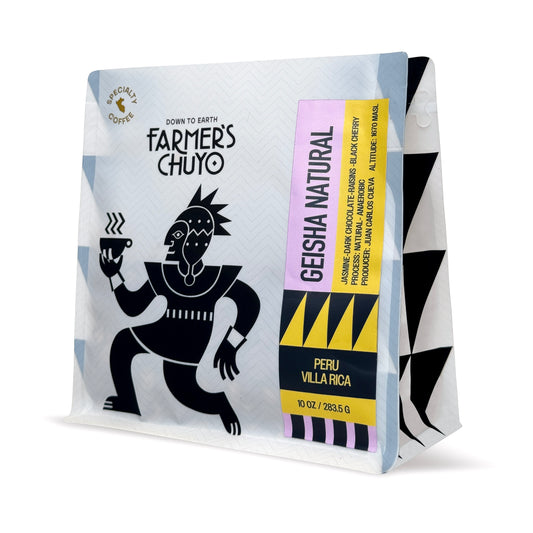
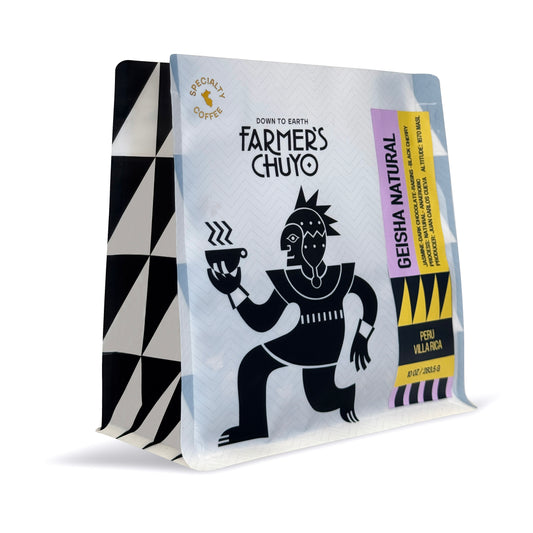
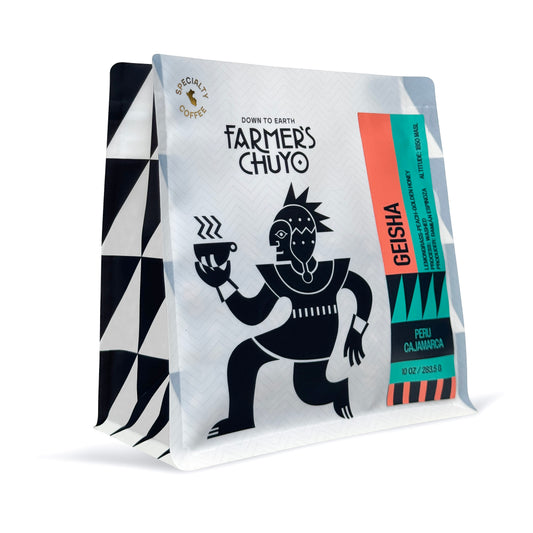
Geisha Natural
 Vendor:Farmer's Chuyo
Geisha Natural
- Regular price
- From $42.46
- Sale price
- From $42.46
- Regular price
Historical Development and Structural Foundations
Coffee arrived in Peru during the mid-18th century through colonial trade routes, gradually establishing itself in regions such as Chanchamayo in Junín and Huánuco. These areas offered the altitude, rainfall, and volcanic soils that Arabica coffee requires to thrive.
Throughout the 19th century, coffee remained a secondary agricultural product. It was not until the late 1800s and early 1900s that Peru began exporting coffee on a meaningful commercial scale. As cultivation expanded along the eastern slopes of the Andes, farmers discovered that elevations between 1,000 and 2,000 meters above sea level created ideal conditions for developing complex and aromatic coffees.
Unlike plantation-based systems found in other producing countries, Peru’s coffee industry evolved through smallholder farming. Today, most producers cultivate between one and two hectares. This decentralized structure influences everything from flavor diversity and traceability to the development of cooperatives and certification programs.


Peru in the Global Coffee Economy
Peru consistently ranks among the world’s top coffee exporters and is one of the largest suppliers of Arabica coffee. The crop plays a crucial role in the country’s agricultural economy, supporting hundreds of thousands of farming families across rural regions.
Beyond farming, the coffee sector also generates employment in milling, transportation, exporting, and cooperative management. Much of Peru’s production is destined for international markets, with the United States and the European Union representing the largest buyers. Countries such as Germany, Belgium, and the U.S. regularly import significant volumes of Peruvian coffee.
Export volumes can fluctuate due to climate conditions, plant diseases such as coffee leaf rust, and global market pricing. However, Peru has demonstrated resilience. After the severe rust outbreak between 2012 and 2014, recovery efforts included replanting programs, improved agricultural training, and the introduction of more resistant coffee varieties.

Specialty Coffee and Quality Development
In recent decades, Peru has increasingly positioned itself within the specialty coffee sector. Farmers, cooperatives, and exporters have adopted quality standards aligned with organizations such as the Specialty Coffee Association (SCA) and World Coffee Research.
Higher elevation farming, improved processing methods, and better access to global buyers have helped Peruvian producers highlight distinctive flavor profiles. Coffees from regions like Cajamarca, Cusco, and San Martín often display bright acidity, floral aromatics, and complex fruit notes that appeal to specialty roasters.
The growth of specialty coffee has also strengthened traceability and direct trade relationships. Many producers now focus on smaller, carefully processed lots that showcase regional identity while providing greater economic stability for farming communities.

Farmer’s Chuyo Specialty Coffee – FAQ
1
What is specialty coffee?
Specialty coffee represents the highest grade of coffee available. These coffees are evaluated and scored by certified graders using standards from the Specialty Coffee Association (SCA). To qualify, a coffee must score 80 points or higher on a 100-point scale during professional cupping.
Specialty coffee also meets strict physical quality standards: a 350-gram sample can contain no primary defects and no more than five secondary defects, ensuring only the highest-quality beans move forward for roasting.
Beyond quality, specialty coffee emphasizes sustainable farming practices, responsible sourcing, and traceability. At Farmer’s Chuyo, we partner with multiple small farms throughout Peru, supporting careful cultivation, selective harvesting, and environmentally responsible practices. This transparency allows each coffee to reflect its origin, terroir, and the craftsmanship of the farmers, resulting in a cleaner, more complex cup.
2
What is a coffee ratio and how do I apply it to my pour-over?
A coffee ratio is the relationship between the amount of coffee grounds and water used when brewing. A common pour-over ratio is 1:16, meaning 1 gram of coffee for every 16 grams of water.
Examples:
- 15g coffee → 240g water
- 17g coffee → 272g water
Using a scale ensures consistency and allows you to adjust the strength of your brew. A lower ratio (1:15) creates a stronger cup, while a higher ratio (1:18–1:19) produces a lighter, more delicate brew.
3
What is a tasting note? Are you adding flavor to your coffee?
Tasting notes describe the natural flavors and aromas found in coffee. These characteristics come from the coffee variety, soil, altitude, climate, and processing method.
For example, a coffee may have notes like:
- Peach
- Citrus
- Honey
- Floral
These flavors are naturally occurring, not added. Specialty coffee highlights the unique profile of each bean, much like wine reflects its grape and region.
4
Do all your coffees come from Peru? Do you plan to bring in coffees from other regions?
Yes. Farmer’s Chuyo focuses exclusively on coffees grown in Peru. We work with multiple producers across the country, allowing us to showcase Peru’s diverse coffee-growing regions and flavor profiles.
While we may explore other origins in the future, our mission is to celebrate the exceptional quality, traceability, and craftsmanship of Peruvian coffee.
5
Can I brew your coffee in a standard coffee maker?
Yes. Farmer’s Chuyo coffee can be brewed in a standard drip coffee maker. While we believe that pour-over and French press methods often yield the best extraction, a well-calibrated drip machine can still produce an excellent cup.
For best flavor, use freshly ground coffee with a uniform grind, a brewing ratio around 1:16 to 1:18, and filtered water to maximize extraction.
6
Do you offer decaffeinated coffee?
While we don’t currently offer decaffeinated coffee, we understand that many customers would like to enjoy a high-quality cup without the caffeine. We’ve heard these requests and hope to offer a decaffeinated option in the future.
7
What grind size should I use?
The grind size depends on your brewing method:
- Pour-over: Medium
- Chemex: Medium-coarse
- French press: Coarse
- Espresso: Fine
Using a uniform grind ensures even extraction, maximizing flavor and preventing over- or under-extraction. A burr grinder is recommended for the most consistent results.
8
What water temperature should I use?
Water temperature greatly affects extraction and flavor:
- 190–195°F (88–90°C): Softer, sweeter cup
- 195–200°F (90–93°C): Ideal for light roasts and high-acidity coffees
- 200–205°F (93–96°C): Extracts more complex fruit and floral notes
Using a thermometer or kettle with temperature control helps ensure consistent results.
9
What is the best way to store my coffee?
To preserve freshness and flavor:
- Use an airtight container to protect beans from air and moisture.
- Keep coffee in a cool, dark place, away from heat, light, and humidity.
- Avoid storing coffee in the refrigerator or freezer, as moisture and odors can affect flavor.
- For optimal taste, brew coffee within 2–4 weeks of the roast date.
Proper storage helps maintain the delicate aromatics and natural tasting notes of specialty coffee.
10
Brewing Tips – Quick Reference
Pour-over uses a medium grind with a 1:16 coffee-to-water ratio and water at 195–200°F (90–93°C). Chemex uses a medium-coarse grind with a 1:16 ratio and the same water temperature of 195–200°F (90–93°C). French Press requires a coarse grind with a 1:16–1:18 ratio and water at 195–200°F (90–93°C). Espresso uses a fine grind with a 1:2 ratio and water at 195–205°F (90–96°C).
Pro Tips:
- Use a scale to measure coffee and water for consistency.
- A uniform grind ensures even extraction and better flavor.
- Filtered water brings out the coffee’s natural tasting notes.
- Adjust the ratio slightly to taste: lower ratio → stronger cup, higher ratio → lighter cup.